
.png)



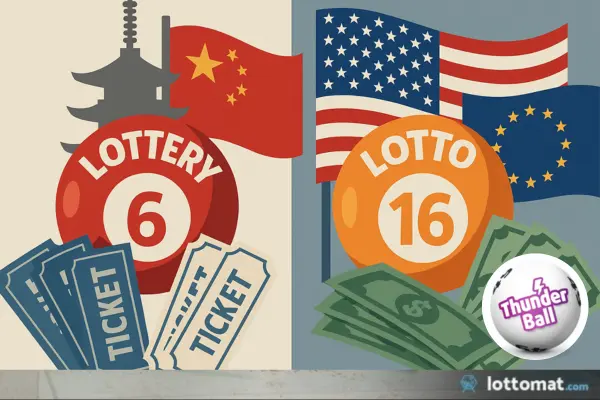
They say East is East and West is West, but when it comes to lottery fever, both hemispheres share an equal passion for life-changing jackpots. However, the way Asian and Western lottery systems operate reveals fascinating differences in prize structures, winning odds, and cultural approaches to games of chance. From Japan’s government-run raffles to China’s massive welfare lottery network and India’s state-by-state system, Asian lotteries present unique alternatives to Western giants like Powerball and EuroMillions. Understanding these distinctions can help players worldwide make informed choices about where to test their luck.
How Do Japan’s Lotteries Differ from Western Draw Games?
Japan’s lottery landscape, known collectively as Takarakuji, operates fundamentally differently from what Western players recognize as traditional lotteries. Interestingly, most Japanese “lotteries” are technically raffles, meaning each ticket has a unique number rather than player-selected combinations.
The Raffle System vs. Number Selection
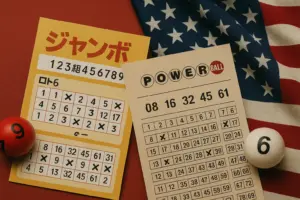
Unlike Powerball or EuroMillions where players choose their numbers, Japan’s Jumbo lotteries sell pre-numbered tickets. This creates several unique characteristics. First, if all tickets sell out, there’s guaranteed to be a winner – no rollover jackpots. Second, players never worry about splitting prizes since each ticket is unique. Third, the odds remain fixed regardless of how many people play.
The Year-End Jumbo Takarakuji represents the largest lottery game in all of Asia, with top prizes reaching 700 million yen (approximately $4.6 million). Each ticket costs just 300 yen (about $2), making it remarkably affordable. However, the odds of hitting the top prize hover around 1 in 10 million – significantly better than Powerball’s 1 in 292 million.
Japan’s True Number-Selection Games
Japan does offer genuine lotteries where players select numbers. LOTO7 requires choosing seven numbers from 1 to 37, with jackpots reaching up to 1.2 billion yen (around $7.8 million) when rollovers occur. The odds stand at approximately 1 in 10 million for the top prize. Meanwhile, LOTO6 offers twice-weekly draws with a maximum jackpot of 200 million yen and slightly better odds.
For players seeking the best odds in Japan, Mini Loto stands out remarkably. With odds of just 1 in 169,911 for the 10 million yen top prize, it offers some of the most favorable chances globally. The trade-off? Smaller maximum jackpots compared to international mega-lotteries.
Cultural and Tax Advantages
One unique feature that sets Japanese lotteries apart: all winnings are completely tax-free. This contrasts sharply with the United States, where federal and state taxes can claim up to 50% of jackpot prizes. The Japanese government factors taxes into ticket prices and operating costs, allowing winners to keep 100% of their prize money.
Additionally, approximately 81.4% of Japanese people have purchased lottery tickets according to 2022 data, reflecting deep cultural integration. The Year-End Jumbo draw has become a New Year’s tradition, with families purchasing tickets together as part of seasonal celebrations.
Read also: How to Claim International Lottery Winnings: Tax Requirements by Country [Complete Guide]
What Makes China’s Lottery System Unique Among Asian Markets?
China operates the world’s second-largest lottery market after the United States, with 2024 sales reaching an astounding $85.8 billion – a 40-year high. Yet most Western players know nothing about how Chinese lotteries function.
The Two-Operator Model
China’s lottery landscape consists exclusively of two state-run operators: China Welfare Lottery (established 1987) and China Sports Lottery (launched 1994). Both function under strict government oversight by the Ministry of Finance, with gambling otherwise remaining illegal across mainland China.
This dual-operator system serves distinct purposes. Welfare Lottery proceeds fund social welfare programs, healthcare, and charity initiatives. Sports Lottery revenue builds community sports facilities and supports athletic development. In 2024, Sports Lottery dominated with 66% of total sales (415.53 billion RMB), while Welfare Lottery generated 207.96 billion RMB.
Prize Structures and Game Formats
China’s most popular game, Double Colour Ball (ShuangSeQiu), closely resembles Powerball’s format. Players select six red numbers from 1 to 33, plus one blue number from 1 to 16. The key differences emerge in prize distribution:
- First Prize (all seven numbers): 70% of the jackpot pool
- Second Prize (six red numbers): 30% of the pool
- Third Prize (five red + blue): Fixed 3,000 yuan (approximately $410)
- Lower tiers: Fixed prizes ranging from 5 to 200 yuan
Prize pools frequently climb into hundreds of millions of yuan, though they rarely reach the billion-dollar heights of Western mega-jackpots. The jackpot winner receives 70% of the prize pool rather than a fixed mega-million amount, meaning payouts fluctuate based on ticket sales.
Scratch-Off Explosion and Youth Appeal
Scratch-off tickets have experienced explosive growth in China, with instant games generating 108.8 billion yuan in sales during 2024 – the fastest-growing lottery segment. Tickets range from 5 to 50 yuan, and games like “Total Quack” (Sports Lottery) and various Welfare Lottery scratch-offs have become particularly popular among younger demographics.
However, transparency concerns occasionally surface. A 2024 incident involving suspected fraud by lottery operators sparked public skepticism, though Chinese officials maintain strict oversight prevents widespread manipulation.
How Do India’s State Lotteries Compare to National Systems?
Unlike the centralized systems in China or Japan, India’s lottery landscape operates on a state-by-state basis, creating dramatic variation across the country. Only 13 of India’s 28 states currently allow lotteries, with Kerala, Sikkim, Nagaland, and Punjab running the most prominent systems.
Kerala: India’s Lottery Pioneer
Kerala State Lotteries, launched in 1967, pioneered India’s lottery industry and remains the gold standard. The system offers seven different weekly draws, one for each day of the week, all held at 3:00 PM. Ticket prices remain remarkably affordable at Rs. 50 (approximately $0.60) for weekly draws.
Prize structures follow a consistent pattern across weekly games:
- First Prize: Varies by draw (typically Rs. 75 lakhs to Rs. 80 lakhs, roughly $90,000-$96,000)
- Consolation Prize: Rs. 8,000
- Second through Ninth Prizes: Descending amounts from Rs. 5 lakhs to Rs. 100
The real excitement comes from Kerala’s six annual Bumper Lotteries, celebrating festivals and seasons. The Onam Bumper offers the largest prize in India: over Rs. 20 crore (approximately $2.4 million). Tickets cost Rs. 500, reflecting the massive top prize. Other bumpers include Christmas New Year, Summer, Vishu, Monsoon, and Pooja.
Sikkim and Nagaland: Multiple Daily Draws
Sikkim currently operates three daily lottery draws at 4:00 PM, 6:00 PM, and 7:00 PM, offering players multiple chances per day. The Dear 6pm lottery represents the cheapest option at just Rs. 6 per ticket, though the massive number of tickets sold (2 crore, or 20 million) means prizes are distributed widely.
Nagaland State Lotteries similarly offer three daily draws under the “Lottery Sambad” brand. First prizes typically reach Rs. 1 crore (approximately $120,000), with tickets costing between Rs. 6 and Rs. 10. The lottery operates under the Lotteries (Regulation) Act, 1998, ensuring government oversight and fair play.
Tax and Claiming Differences
Indian lottery taxation differs significantly from both Asian neighbors and Western systems. Winners face a 30% lottery tax on prizes plus a 10% agent commission, meaning a Rs. 1 crore winner actually receives approximately Rs. 60 lakhs after deductions. Small prizes under Rs. 5,000 can be claimed at local lottery shops, while larger amounts require submission to district lottery offices or banks with valid identification.
Winners must claim prizes within 30 to 60 days depending on the state – much shorter than the typical 180-day to one-year windows in Western lotteries.
What Are the Real Differences Between Asian and Western Jackpot Sizes?
Perhaps the most striking distinction between Asian and Western lotteries involves sheer jackpot magnitude. Powerball and Mega Millions regularly produce billion-dollar jackpots, while even the largest Asian games rarely exceed $10 million in maximum prizes.
The Numbers Tell the Story
Consider these comparative maximum jackpots:
Western Lotteries:
- Powerball: Record $2.04 billion (2022), typical jackpots start at $20 million
- Mega Millions: Record $1.58 billion (2023), typical jackpots start at $20 million
- EuroMillions: Capped at €240 million (approximately $255 million)
- UK National Lottery: Record £195 million (approximately $240 million)
Asian Lotteries:
- Japan Year-End Jumbo: Maximum 700 million yen (approximately $4.6 million)
- Japan LOTO7: Maximum 1.2 billion yen with rollovers (approximately $7.8 million)
- China Double Colour Ball: Variable based on 70% of prize pool, typically peaks around $15-20 million
- India Onam Bumper: Rs. 20 crore (approximately $2.4 million)
This 100-fold difference stems from multiple factors: market size, ticket prices, rollover policies, and prize allocation structures.
Why the Massive Gap Exists
Western mega-lotteries operate across multiple states or countries, creating enormous player pools. Powerball spans 45 U.S. states plus Washington D.C., Puerto Rico, and the U.S. Virgin Islands. EuroMillions covers nine European countries. This geographic spread generates massive ticket sales supporting billion-dollar prizes.
Additionally, Western lotteries employ aggressive rollover strategies. When no one wins the jackpot, the prize pool carries over to the next drawing, allowing jackpots to grow exponentially over weeks or months. Asian lotteries typically either guarantee winners (Japan’s raffle system) or cap maximum prizes (EuroMillions style).
How Do the Odds Compare Across Continents?
Odds represent another crucial distinction between Asian and Western lottery systems, with Asian games generally offering significantly better chances of winning top prizes.
Odds Breakdown by Region
Western Lottery Odds:
- Powerball: 1 in 292,201,338 for the jackpot
- Mega Millions: 1 in 302,575,350 for the jackpot
- EuroMillions: 1 in 139,838,160 for the jackpot
- UK National Lottery: 1 in 45,057,474 for the jackpot
Asian Lottery Odds:
- Japan Mini Loto: 1 in 169,911 for the jackpot
- Japan LOTO7: 1 in 10,295,472 for the jackpot
- Japan Year-End Jumbo: Approximately 1 in 10,000,000 (fixed ticket pool)
- China Double Colour Ball: Approximately 1 in 17,721,088 for all seven numbers
Japan’s Mini Loto offers odds nearly 2,000 times better than Powerball, though the prize is roughly 1,500 times smaller. This trade-off reflects different design philosophies: Asian lotteries prioritize reasonable winning chances with modest life-changing amounts, while Western mega-lotteries chase astronomical jackpots despite infinitesimal odds.
Prize Tier Accessibility
Both systems offer multiple prize tiers, but distribution varies. Powerball and Mega Millions award nine prize levels, with even the lowest prize ($4 or $2) requiring specific number matches. The overall odds of winning any prize stand around 1 in 25 for Powerball.
Asian lotteries often structure more prize tiers with easier access. Japan’s Jumbo lotteries may offer dozens of prize levels beyond the top prize, while Indian state lotteries typically include eight to nine tiers with consolation prizes for tickets close to the winning number. This creates more frequent smaller wins, sustaining player engagement.
What Cultural Factors Shape These Lottery Differences?
Beyond mathematics and structure, profound cultural differences influence how Asian and Western societies approach lottery games.
Government Oversight and Social Purpose
Asian lotteries predominantly serve explicit social welfare functions. China’s two operators exist specifically to fund community projects and social programs. Japan’s Takarakuji originally emerged post-World War II to finance reconstruction. India’s Kerala lottery system was designed to fight poverty and unemployment, with proceeds supporting state development.
Western lotteries certainly contribute to education and public programs, but the emphasis skews more heavily toward entertainment and massive jackpot dreams. Marketing campaigns focus on “life-changing money” and instant wealth rather than community benefit.
Attitudes Toward Gambling
Gambling restrictions vary dramatically. China maintains strict anti-gambling laws with only state-run lotteries exempt. Japan similarly limits legal gambling to specific government-sanctioned activities. This creates lottery systems designed as acceptable exceptions rather than entertainment industries.
Western countries generally permit more diverse gambling activities – casinos, sports betting, poker – making lotteries just one entertainment option among many. This competitive landscape pushes Western lotteries to offer increasingly massive jackpots to maintain market share.
Group Play and Community Participation
Asian lottery culture emphasizes community participation more prominently. Japanese families commonly purchase Year-End Jumbo tickets together as New Year traditions. Chinese players frequently form office pools or family syndicates. Indian lottery agents serve as community gathering points where locals discuss numbers and strategies.
While Western players certainly form office pools and syndicates, the culture tends more toward individual play and personal dreams of wealth. Marketing emphasizes “you could be the next millionaire” rather than community involvement.
Read also: How to Play Lottery Safely: 10 Security Best Practices for Online Players
Which System Offers Better Value for Players?
The million-dollar question – or in this case, the billion-dollar question – is which lottery system provides better value. The answer depends entirely on what players prioritize.
For Realistic Winning Chances
Asian lotteries dominate if you value reasonable odds of actually winning something significant. Japan’s Mini Loto offers odds 2,000 times better than Powerball, while still providing a 10 million yen ($65,000) prize that would meaningfully change most lives. Chinese and Indian lotteries similarly offer odds in the tens of millions rather than hundreds of millions.
For players treating lotteries as entertainment with genuine winning potential, Asian systems provide far more realistic prospects. You’re still unlikely to win, but “extremely unlikely” beats “virtually impossible.”
For Maximum Jackpot Dreams
Western mega-lotteries win decisively for players chasing truly life-altering fortunes. A $100 million Powerball jackpot provides generational wealth impossible to obtain in Asian games. If your lottery strategy involves “go big or go home,” the astronomical Western jackpots justify the terrible odds.
Additionally, Western lotteries offer international play through authorized online lottery services, increasing accessibility for global players.
For Tax Efficiency
Japan provides unmatched value with completely tax-free winnings. A 700 million yen prize means 700 million yen in your pocket – no deductions, no surprises. Compare this to winning $10 million in Powerball, where federal taxes immediately claim $2.4 million, state taxes take another $1 million (varies by state), leaving approximately $6.6 million.
China and India tax lottery winnings (30% in India), though less aggressively than U.S. federal rates for large prizes.
For Frequency and Variety
Asian systems excel in offering daily or multiple-daily draws. Sikkim’s three daily lotteries, Nagaland’s daily Lottery Sambad, Kerala’s seven weekly draws, and China’s frequent games provide constant action. Western mega-lotteries typically draw twice weekly (Wednesday and Saturday for Powerball), creating longer waits between chances.
Can International Players Access These Asian Lotteries?
Accessibility represents a significant limitation for many Asian lotteries. Unlike Powerball and EuroMillions, which authorized online lottery services make available globally, most Asian lotteries restrict participation to local residents or physical ticket purchases.
Japan’s Takarakuji requires physical presence in Japan to purchase tickets at lottery outlets, convenience stores, or through the official online platform (which requires Japanese residency). Only residents can claim prizes, though tourists can technically buy tickets for fun without prize-claiming rights.
China’s lotteries similarly require physical presence at authorized vendors. Previous online purchasing options through apps like WeChat were suspended following regulatory issues. International play remains effectively impossible for most Chinese lotteries.
Indian state lotteries vary by jurisdiction but generally require physical ticket purchases within the respective state. Some authorized lottery platforms may offer tickets to Indian residents nationwide, but international access remains limited.
A few international lottery websites claim to offer Asian lottery betting services, but players should exercise extreme caution regarding legitimacy and legal compliance.
The Bottom Line: East Meets West in Lottery Innovation
Asian and Western lottery systems reflect fundamentally different philosophies about games of chance. Western mega-lotteries prioritize astronomical jackpots and explosive marketing, accepting infinitesimal odds as the trade-off for billion-dollar dreams. Asian lotteries emphasize social welfare, reasonable winning chances, and community participation over individual wealth fantasies.
For players, the choice depends on personal priorities. Chasing realistic winning chances? Japan’s Mini Loto or India’s state lotteries offer odds thousands of times better than Powerball. Dreaming of nine-figure fortunes? Western mega-lotteries remain unmatched despite terrible odds. Seeking frequent action and variety? Asian systems provide multiple daily draws with diverse game formats.
The cultural differences extend beyond mere numbers. Asian lotteries integrate into social traditions – New Year celebrations in Japan, festival bumpers in India, community-building in China. Western lotteries function more as entertainment industries competing for player attention in crowded gambling markets.
Interestingly, convergence appears underway. Asian markets are gradually introducing larger jackpots and more aggressive marketing, while Western lotteries experiment with better odds and more frequent draws. China’s $85 billion annual lottery market demonstrates that Asian players increasingly embrace lottery participation, potentially driving future innovations.
Perhaps the ultimate lesson is that lottery fever transcends cultural boundaries, even as the games themselves reflect distinct values. Whether you prefer Japan’s 1 in 170,000 odds for a modest prize or Powerball’s 1 in 292 million odds for a billion-dollar jackpot, the universal hope remains the same: that lightning might strike and change everything forever.
Just remember to play responsibly, regardless of which side of the Pacific you choose for your ticket purchase.
Read also: Lottery Winners Who Kept Playing: 15 People Who Won Major Jackpots Twice or More