
.png)



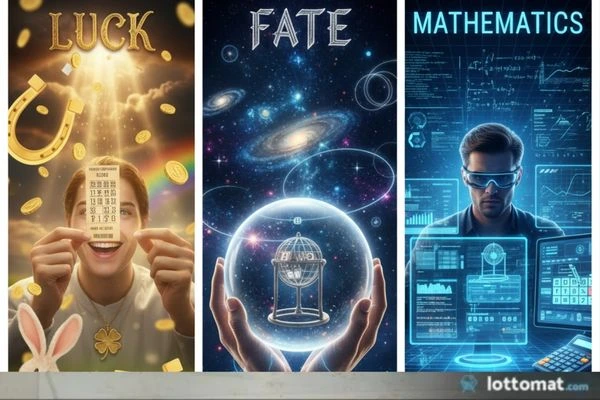
You stand in line at the convenience store, clutching your lottery ticket, heart racing with anticipation. As the numbers flash across the screen, a familiar question crosses your mind: is winning truly about luck, or is there something more to it? This age-old debate has captivated millions of lottery players worldwide. Some swear by their lucky numbers, others trust in fate, while a growing group relies on mathematical strategies. But what really determines who walks away with the jackpot?
The truth might surprise you. While lottery games are designed as games of chance, the intersection of probability, psychology, and yes – even a dash of luck – creates a fascinating landscape. Every week, someone defies astronomical odds to win life-changing sums. Are they simply fortunate, or did they employ strategies that tipped the scales in their favor? Let’s dive deep into this compelling question and uncover what science, mathematics, and experience tell us about winning the lottery.
Is It Really Just Pure Luck?
When you think about lottery wins, luck seems like the obvious answer. After all, lottery draws are completely random, aren’t they? The balls tumble in their machines without preference or pattern. Each number has an equal chance of being selected, making every combination theoretically as likely as any other. This randomness forms the foundation of lottery integrity worldwide.
However, dismissing lottery success as mere luck oversimplifies a complex reality. While the draw itself is random, how you play can significantly impact your overall experience and potential returns. Consider this: two players might have equal odds of winning the jackpot, but one might win more money because they chose less popular numbers. When multiple people share a jackpot, the prize splits among winners. Therefore, selecting unique number combinations – while not increasing your odds of winning the lottery – can increase your potential payout.
How Do Your Playing Choices Affect Your Success?
Furthermore, luck operates within a framework of decisions. Do you play regularly or sporadically? Do you buy one ticket or multiple? Do you join a syndicate or play alone? These choices don’t change the fundamental randomness of the draw, but they dramatically affect your engagement with chance itself. Think of luck as the ocean’s waves – you can’t control them, but you can certainly choose when and how to dive in. Strategic decisions about when and how you play create the context in which luck can find you.
What Does Mathematics Tell Us About Winning Odds?
Mathematics offers a sobering perspective on lottery games. The numbers don’t lie, and they paint a picture of truly astronomical odds. Let’s examine the cold, hard facts that every lottery player should understand before purchasing their next ticket.
The following table presents the actual probability of winning major international lottery jackpots, revealing just how challenging these odds really are.
| Lottery Game | Odds of Winning Jackpot | Probability Percentage |
|---|---|---|
| Powerball | 1 in 292,201,338 | 0.00000034% |
| Mega Millions | 1 in 302,575,350 | 0.00000033% |
| EuroMillions | 1 in 139,838,160 | 0.00000072% |
| UK Lotto | 1 in 45,057,474 | 0.0000022% |
These numbers reveal a humbling truth: you’re more likely to be struck by lightning, become a movie star, or find a pearl in an oyster than win a major lottery jackpot. The mathematics is unforgiving and doesn’t care about your lucky shirt or special rituals. Each draw remains independent, meaning previous results have zero influence on future outcomes. This is called the gambler’s fallacy – the mistaken belief that past events affect future probabilities in random processes.
Can Mathematics Offer Any Hope for Players?
Yet mathematics also reveals something interesting. While jackpot odds are minuscule, smaller prize tiers offer much better chances. Many lotteries feature multiple prize levels with increasingly favorable odds. Understanding this mathematical reality helps players set realistic expectations and appreciate smaller wins along the way. Moreover, mathematics shows us that consistency matters more than timing – playing regularly with a fixed budget provides more opportunities than sporadic large purchases.
Does Fate or Destiny Play Any Role?
Many lottery winners describe their experience as feeling “meant to be.” They report strange coincidences, prophetic dreams, or inexplicable urges to buy lottery tickets at specific moments. These narratives fuel the belief that something beyond random chance governs lottery outcomes. But does destiny actually influence who wins?
From a scientific standpoint, fate represents a philosophical concept rather than a measurable force. Lottery systems are designed with random number generators and physical ball machines that operate according to physics and probability, not cosmic design. However, the human mind excels at finding patterns and meaning in random events. This tendency, called apophenia, makes us perceive connections where none exist.
Why Do People Believe in Lottery Destiny?
Nevertheless, the psychological comfort of believing in fate shouldn’t be dismissed. If faith in destiny encourages someone to play and they happen to win, does it matter whether fate was “real”? The belief itself becomes part of their winning story. Many cultures embrace concepts of luck, fortune, and destiny as meaningful forces. These beliefs shape how people engage with uncertainty and risk.
Interestingly, research shows that people who believe they’re “lucky” often behave in ways that create more opportunities. They stay optimistic, remain open to possibilities, and persist through setbacks. In lottery terms, this might mean playing consistently rather than giving up after losses. While this doesn’t change the mathematical odds, it does keep players in the game long enough for that winning combination to potentially appear. Belief in fate can become a self-fulfilling prophecy by influencing behavior.
Can Mathematical Strategies Actually Help You Win?
Despite the random nature of lottery draws, several mathematical approaches claim to optimize your chances. Do any of these strategies hold water, or are they just elaborate illusions? Let’s examine the most popular mathematical techniques players employ.
What About Wheeling Systems?
Wheeling systems involve playing multiple combinations of chosen numbers to guarantee certain prize tiers. For example, if you select ten numbers and wheel them, you create dozens of combinations ensuring that if several of your chosen numbers appear, you’ll definitely win something. These systems don’t increase your odds of winning the jackpot, but they improve your chances of winning secondary prizes by providing comprehensive coverage.
The downside? Wheeling systems require purchasing many tickets, which significantly increases costs. For casual players, the investment often exceeds potential returns. However, lottery syndicates frequently employ wheeling to maximize group coverage. When costs split among multiple people, wheeling becomes more economically viable.
TIP: Check the latest lottery draw results on our site and discover the lucky numbers.
Should You Choose Random Numbers or Personal Numbers?
Here’s where mathematics offers clear guidance. Many players select birthdays, anniversaries, or other meaningful dates. This creates a problem: these numbers fall between 1 and 31, leaving higher numbers underrepresented. Consequently, if you win with common number patterns, you’re more likely to share the jackpot with numerous other winners.
Random selection or choosing numbers above 31 doesn’t increase your winning odds. However, it potentially increases your payout by reducing the likelihood of shared jackpots. Quick picks – computer-generated random selections – offer this advantage automatically. Studies show that roughly 70% of lottery jackpots are won with quick picks, though this largely reflects that most players use this method.
Do “Lucky” Numbers Really Exist?
Walk into any lottery retailer and you’ll hear players discussing their lucky numbers. Some stick with the same combination for decades. Others consult numerology, astrology, or dream interpretations. But can numbers truly be lucky?
Mathematically, the answer is definitively no. In a truly random lottery draw, every number has precisely equal odds of appearing. The number 7 isn’t luckier than 42, despite its cultural associations with fortune. Similarly, sequences like 1-2-3-4-5-6 are just as likely to win as any seemingly random combination – though they’re chosen so frequently that winning with them would mean splitting the prize many ways.
Why Do Players Still Believe in Lucky Numbers?
However, lucky numbers serve an important psychological function. They create emotional investment and ritual around playing. This transforms lottery participation from a purely transactional activity into something more meaningful. If playing your grandmother’s birthday numbers brings you joy and connection, that value exists regardless of mathematical reality. The entertainment and emotional benefits have worth beyond monetary returns.
Culturally, certain numbers carry significance across societies. In Chinese culture, 8 symbolizes prosperity and fortune. Western cultures often favor 7 while avoiding 13. These preferences create interesting patterns in how people worldwide select lottery numbers. While they don’t affect actual odds, they do influence prize sharing when these numbers win.
Read also: How to Increase Your Lottery Odds: Smart Strategies That Actually Work in 2026
How Does Psychology Influence Lottery Play?
Understanding the psychology behind lottery play reveals why people continue playing despite unfavorable odds. Several cognitive biases shape how we perceive our chances and engage with lottery games.
The availability heuristic makes recent or memorable wins seem more common than they are. When media extensively covers jackpot winners, our brains overestimate the likelihood of winning. We remember the success stories while forgetting the millions who didn’t win. This bias keeps lottery games popular despite mathematical realities.
What Psychological Tricks Keep Us Playing?
Additionally, the near-miss effect powerfully affects lottery players. Getting four out of six numbers correct feels tantalizingly close to winning, triggering excitement and encouraging continued play. Psychologically, near-misses activate the same brain regions as actual wins, creating a false sense of “almost there” that motivates persistence.
The control illusion represents another significant factor. Players who choose their own numbers feel more confident than those using quick picks, despite identical odds. This perceived control makes the experience more engaging and satisfying. Similarly, rituals around purchasing tickets – buying from specific stores, playing at certain times – create a sense of agency in an inherently random process. These psychological factors make lottery playing feel less random than it actually is.
What Genuinely Increases Your Chances of Winning?
After examining luck, mathematics, and psychology, what practical steps actually improve your lottery prospects? Let’s separate fact from fiction with evidence-based recommendations.
First, the only guaranteed way to increase your odds is playing more combinations. If one ticket gives you a 1 in 292 million chance, two tickets give you 2 in 292 million. However, this represents a minuscule improvement requiring substantial investment. Buying 100 tickets only raises your odds to 100 in 292 million – still astronomically small.
What’s the Smartest Way to Play the Lottery?
Joining a lottery syndicate offers a more practical approach. By pooling resources with others, you can purchase many more tickets while limiting individual costs. Syndicates account for a significant percentage of major lottery wins worldwide. The trade-off involves sharing any prize, but winning a portion of a jackpot beats not winning at all.
Playing less popular lotteries with better odds provides another strategy. While prizes may be smaller, your chances of winning something increase dramatically. Regional lotteries often feature odds of 1 in 1 million or better – still long shots, but far superior to mega-lottery odds. Consider whether you’d prefer a tiny chance at $500 million or a less tiny chance at $1 million.
Finally, play responsibly within your means. Set a strict entertainment budget and never exceed it. View lottery tickets as you would movie tickets or concert admission – a form of entertainment with costs attached. If you happen to win, it’s a wonderful bonus. If not, you’ve enjoyed the anticipation and dreams without financial harm. Responsible play ensures the lottery remains fun rather than becoming a financial burden.
Finding Your Answer to the Luck-Math Question
So, is lottery success about luck, fate, or mathematics? The truth encompasses all three perspectives. Mathematics governs the mechanics – the odds remain fixed and unforgiving regardless of beliefs or strategies. Luck determines who happens to hold the winning combination when those specific numbers appear. And perhaps fate represents the mysterious timing that brings someone to purchase that particular ticket at that particular moment.
What matters most is approaching lottery play with realistic expectations and healthy attitudes. Understand the astronomical odds you face. Recognize that winning isn’t likely but remains possible. Employ sensible strategies like avoiding common number patterns and considering syndicates. Most importantly, never gamble more than you can afford to lose cheerfully.
Millions of people enjoy lottery games worldwide, finding excitement in possibility and community in shared dreams. Whether you believe in mathematical strategy, lucky numbers, or destined fortune, the lottery offers a unique form of entertainment. Just remember: while someone will eventually win, it probably won’t be you – and that’s perfectly okay. The real question isn’t whether you’ll win, but whether you’re playing responsibly and enjoying the journey itself.
If you want to test your own luck and explore different lottery games with varying odds, you can find comprehensive information about online lotteries with different probability levels. Who knows? Perhaps today is your destined day, your lucky moment, or simply the day when mathematical probability finally aligns in your favor.
Read also: TOP 7 Luckiest Countries for Lottery Winners: Statistical Analysis 2015-2025